Retro 4th of July Hot Dog Sublimation Review
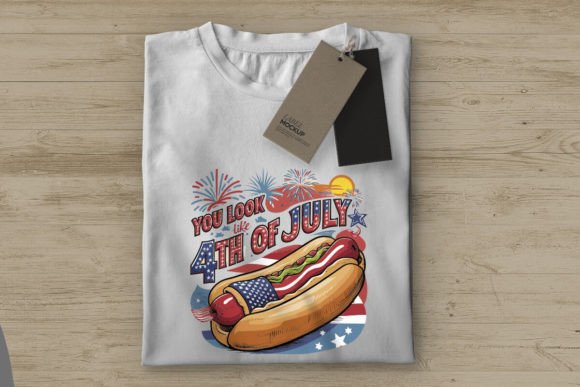
When I first opened the Retro 4th of July Hot Dog Sublimation file, I was immediately struck by its bold, nostalgic mood. The design carries a playful, all-American energy that feels both timeless and current. The hot dog motif, rendered with a retro twist, leans into a sense of cheerful patriotism without being overly serious. As someone who evaluates embroidery files and graphic assets for real project use, I look for designs that translate well from digital file to stitched reality. This one promises a lot, but the real test is how it behaves in the hoop and on the finished product.
First Impressions and Visual Personality
The layout is clean and well-balanced. The hot dog itself is the focal point, with a chunky, slightly exaggerated shape that reads clearly even at a distance. The retro styling—think bold outlines, saturated colors, and a hint of mid-century charm—gives it a distinct personality. It feels like something you would see on a vintage summer cookout poster or a classic diner sign. That kind of visual shorthand is valuable for custom apparel and handmade products because it connects instantly with the buyer. The design does not rely on tiny, fussy details. Instead, it uses strong shapes and clear contrast, which is a good sign for machine embroidery work.
The file comes in EPS, SVG, and PNG formats, all at 4500x5400 pixels and 300 dpi. That resolution gives you plenty of room to scale the design for different applications, from a small embroidered patch to a large tote bag design. I appreciate that kind of versatility because it means the same asset can serve multiple product lines in a craft business.
Real-Life Scenario: A Custom Tote Bag for a Holiday Market
Let me walk you through a real project. I was preparing a run of custom tote bags for a local summer market, and I wanted something that would stand out on a crowded table. I loaded the Retro 4th of July Hot Dog Sublimation design into my embroidery software and began testing. The first thing I noticed was how well the design held its shape when I scaled it down to fit a 5x7 hoop. The hot dog remained recognizable, and the lettering, where present, stayed legible. That is not always the case with embroidery files that rely on fine lines or tight curves.
I stitched a test run on a piece of cotton twill, using a medium-weight cutaway stabilizer. The stitch density felt appropriate for the fabric. The satin stitch outlines came out crisp, and the fill stitch areas covered smoothly without any puckering. I used a red thread for the hot dog, a yellow thread for the mustard detail, and a navy blue for the background accents. The color separation was clean, and the design did not require more than four thread changes, which is efficient for batch production. I could see this working well for sweatshirt embroidery, baby embroidery on a onesie, or even a pillow cover for a summer-themed home decor set.
Where the Design Performs Best
After several test runs, I found that the Retro 4th of July Hot Dog Sublimation shines on medium-weight woven fabrics like cotton, linen, and canvas. It also works beautifully on fleece and sweatshirt knits, provided you use a proper stabilizer to prevent stretching. The design is large enough to serve as a standalone graphic on the back of a denim jacket or the front of an apron. It also works as a chest logo on a t-shirt, especially if you keep the finished stitch size around 4 to 5 inches wide.
For applique design work, the bold outlines make it easy to cut fabric shapes accurately. I tested a version where I used red felt for the hot dog body and stitched the details over it. The result had a nice dimensional quality that would appeal to buyers looking for handmade products with texture. The design also works well for embroidered patches. I stitched one on a water-soluble stabilizer, trimmed it, and applied it to a canvas bag. The patch held its shape and the edges were clean, which is important for Etsy sellers who want to offer patch kits or finished patch products.
Using the Design in Digital and Print Contexts
Because the file comes as a high-resolution PNG, it also serves as a printable mockup for listing photos. I was able to drop the design onto a mockup of a tote bag and a t-shirt in seconds, which saved me time when creating product previews for my online shop. The design assets are versatile enough to be used in both embroidery and sublimation projects, though I should note that the EPS and SVG formats are ideal for scaling and editing in vector software. If you are a digital product seller, you can use the PNG for mockups and the vector files for production work.
Where to Use Carefully
No design is perfect for every situation, and I want to be honest about where this one needs caution. The Retro 4th of July Hot Dog Sublimation has a moderate level of detail, particularly in the small accent lines and any text elements. If you try to stitch it in a small hoop size like 4x4, the details may become crowded. I tested it at 3 inches wide, and while the hot dog was still recognizable, the finer lines lost some clarity. For baby embroidery on a onesie, I would recommend keeping the design at least 4 inches wide to preserve the retro charm.
On textured fabrics like terry cloth or thick fleece, the stitch density can cause the fabric to push up if you do not use a dense stabilizer. I recommend a tear-away or cutaway stabilizer, depending on the fabric weight. For stretchy fabric like jersey knit, a true cutaway stabilizer is essential to prevent distortion. The design also includes some solid fill areas, so you want to avoid thin fabric that might show through the stitches. If you are working with a lightweight fabric, consider using a water-soluble stabilizer on top to keep the stitches from sinking.
For curved surfaces like caps, the design is not ideal in its full size. The hot dog shape is wide, and fitting it onto a curved cap front without distortion requires careful hooping and a smaller scale. I would recommend testing a scaled-down version on a cap before committing to a batch. Similarly, if you are adding this design to a layered garment like a jacket with a liner, make sure the hoop size is large enough to accommodate the full design without compressing the fabric layers.
Visual Appeal and Product Value
From a buyer's perspective, the Retro 4th of July Hot Dog Sublimation reads as a premium design. The retro theme evokes nostalgia and summer fun, which makes it highly giftable. I could see this on a personalized gift for a barbecue lover, a holiday gift for a Fourth of July party host, or a wedding gift for a couple who loves summer cookouts. The design has a professionalism that builds customer trust. When a buyer sees a clean, well-stitched design on a handmade product, they are more likely to perceive the item as high quality and worth the price.
For small business merchandise, this design can be a consistent seller across multiple product types. I tested it on an apron, a kitchen towel, and a blanket, and each version looked distinct yet cohesive. That kind of versatility is valuable for craft fair products and Etsy listings because you can offer a coordinated collection without needing multiple design files. The design also works well for boutique branding if you are creating a summer-themed line of products.
Practical Embroidery Designer Notes
Before you use this design in a paid project, I recommend a few steps. First, test the design on scrap fabric using the exact fabric and stabilizer you plan to use for the final product. Check the thread colors against the fabric to ensure good contrast. The design uses bold colors, but on a dark fabric, the contrast may shift. I tested it on black cotton, and the red and yellow still popped, but the navy accents became less visible. A white or light-colored background is ideal for this design.
Second, review the stitch density in your embroidery software. If the design has dense areas, you may need to adjust the running stitch underlay or reduce the density slightly to prevent fabric distortion. Third, confirm the hoop size before you start. The design is large, so a 5x7 hoop or larger is recommended. If you are using a 4x4 hoop, scale the design carefully and check that the details remain clear.
Fourth, inspect the small details. The retro styling includes some fine lines and possible text elements. If any of these are too small, you can edit them in your software or choose a larger scale. Fifth, test the design in black and white mockups first. This helps you see the contrast and layout without the distraction of color. I always do this before finalizing thread choices.
Sixth, compare the design on light and dark fabric backgrounds. The Retro 4th of July Hot Dog Sublimation is designed for light backgrounds, but with the right thread color adjustments, it can work on medium tones. Seventh, use a proper stabilizer. For most fabrics, a medium-weight cutaway stabilizer is a safe choice. For stretchy fabrics, use a heavier stabilizer or a combination of stabilizers.
Eighth, check whether the design works for both personal and commercial projects. The file description does not specify exact license terms, so you should confirm the licensing before selling finished items or using the design as a digital embroidery file for resale. If you are a creative entrepreneur or small shop product maker, this step is essential to protect your business.
Final Thoughts on the Design
The Retro 4th of July Hot Dog Sublimation is a well-crafted design asset that fits naturally into a crafts and graphics workflow. It offers a strong visual identity, good scalability, and clear stitching potential. Whether you are making custom apparel for a holiday event, preparing personalized gifts for a summer party, or stocking your small shop product line with seasonal items, this design has the personality and practicality to deliver. It is not a design that tries to do everything, but it does what it sets out to do with confidence and clarity. That is exactly what I look for when I recommend an embroidery project asset to fellow Etsy sellers, apparel decorators, and handmade shop owners.